S. M. PORTER
  • Home
  • Books
  • Blog
  • History Bites
  • About

​Archaeology
​Bites
The real adventures of a Commercial Archaeologist

surviving the winter

8/12/2021

0 Comments

 
Your first winter in commercial archaeology is usually the worst and those who survive it will more than likely continue in their archaeological careers for many years to come. There is however a knack to getting through it.
​
 Whilst the UK doesn’t have the coldest winter’s per-se it does have some pretty wet, nasty and downright miserable ones. It’s also worth remembering that January and February tend to be much worse than November and December with January often bringing snow and heavy rain and wind. So, for those who find themselves struggling with the reasonably mild temperatures on the run up to Christmas, unfortunately it is only going to get worse before it gets better. But remember, everyone on site is cold, some may be colder than others – we all run differently. Personally, I have terrible circulation and lose feeling in my fingers as soon as the temperature drops below 5 degrees, I often can’t feel a thing (or answer my phone properly) between the end of October and the middle of March. So far my fingers haven’t fallen off and this will be my fifteenth winter in the field.
​
Picture
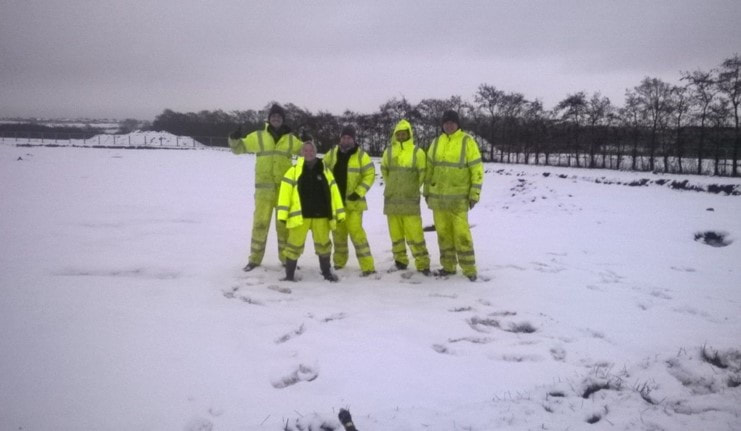
Happy Archaeologists! No, really, they were happy, though much less so when I suggested we move the snow out of the way - photo author's own
​So, as a commercial field archaeologist how do you survive the winter? Here are my top tips:
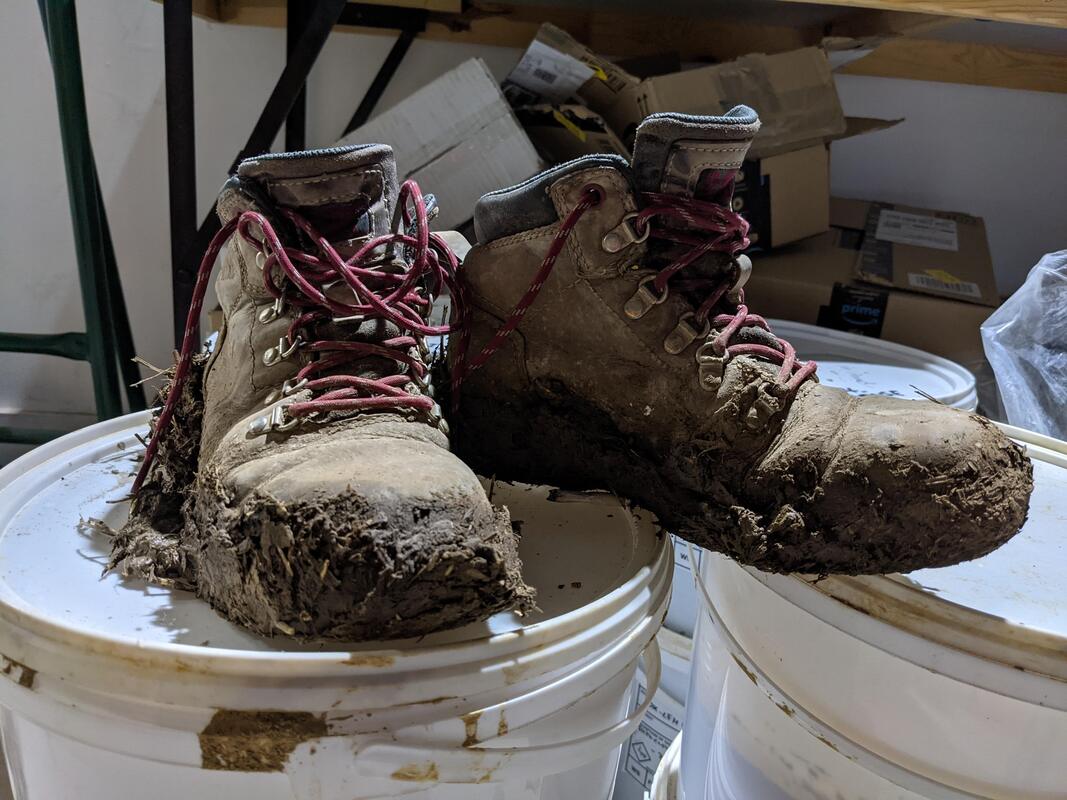
 
  • Absolute top of the list – Warm dry feet. If your feet are warm, you are warmer. Keep a spare pair of warm socks handy and when changing out of the steel toe caps at the end of the day change socks too, it does help, and if for any reason your feet have gotten wet then a fresh pair of socks help feet feel warm and dry. Also, don’t leave your mud covered, damp boots in the van, take them home or put them on a bag or newspaper in the office. Basically, anywhere that they may have a chance of drying out and the steel in them won’t be like ice in the morning. If your site is lucky enough to have a drying room, make good use of it.
Picture
Believe it or not these are "clean" boots after a day on site in winter - photo (and boots) author's own
  • Second – it sounds counter intuitive but don’t get too warm at break times, going from the zero or sub-zero temperatures into a warm cabin can feel great, but it can also make you feel colder when you head back outside. That’s not to say don’t put the heaters on, definitely do put them on, but watch the inside temperature it doesn’t need to be too hot.
  • Invest in a good set of thermals. Hiking or sports thermal base layers are great as they are designed to wick away sweat, so you won’t end up damp and cold. Depending on how your body deals with the cold probably changes what you need. Personally, I have the lot, thermal leggings, thermal short sleeved tops, thermal long-sleeved tops so I can mix and match based on the weather and what I might be doing on any given day.
  • Layer up, a big warm fluffy jumper might feel great at home but if you’re digging holes then recording stuff you’re likely to either be too hot or too cold, several layers of t-shirts, vests, thin jumpers and fleece jackets can work really well as you can add or remove thin layers as required and air trapped between the layers will help keep you warm.
Picture
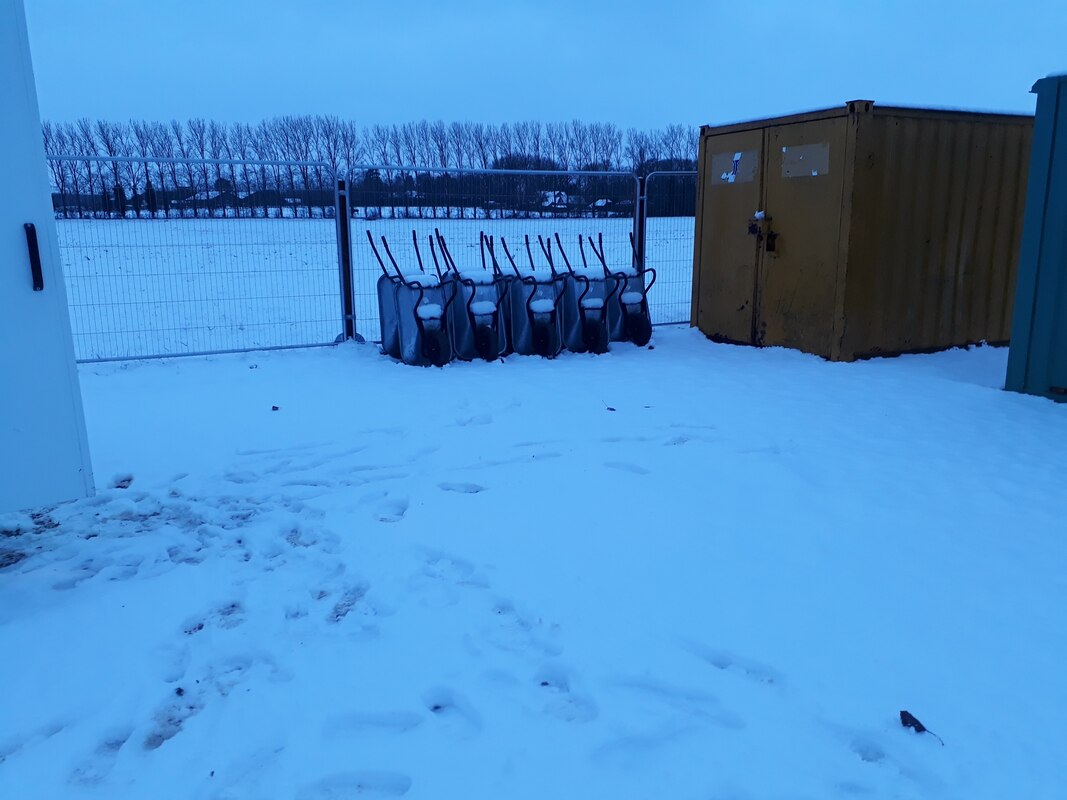
obligatory arty shot of wheelbarrows in the snow - photo author's own
  • Don’t underestimate newspaper as insulation – there’s a reason those pro Tour-De France cyclists can be seen stuffing newspapers down their jersey’s on a wet and wild Alpine stage. Paper is good insulation, stuff it under your jumper front and back, or line your boots with it – I’ve been known to stick it between layers of socks if I’m wearing wellies (wellies are horrible in winter – although most steel toe cap and footplate boots tend to feel like walking around with your feet encased in ice – when will someone invent the heated boot?)
  • Several pairs of gloves are useful too as each inevitably end up wet and there are few things worse than trying to put on half frozen, wet gloves.
  • Vary your work – if you have a lot of recording to do, see if you can record for half an hour and dig something for a bit to warm up then do another recording stint – or if you have a nice supervisor try and save up paperwork to do in the cabin in the afternoon, that way you can dig and keep warm in the morning and write up in the relative warmth of the cabin in the afternoon (or car if you don’t have a cabin).
  • Keep hydrated – water may not be what you want to drink – we all crave that warm mug of something to wrap our fingers around and warm the insides, but keeping hydrated will help stop your skin from drying out and aid your circulation.
Picture
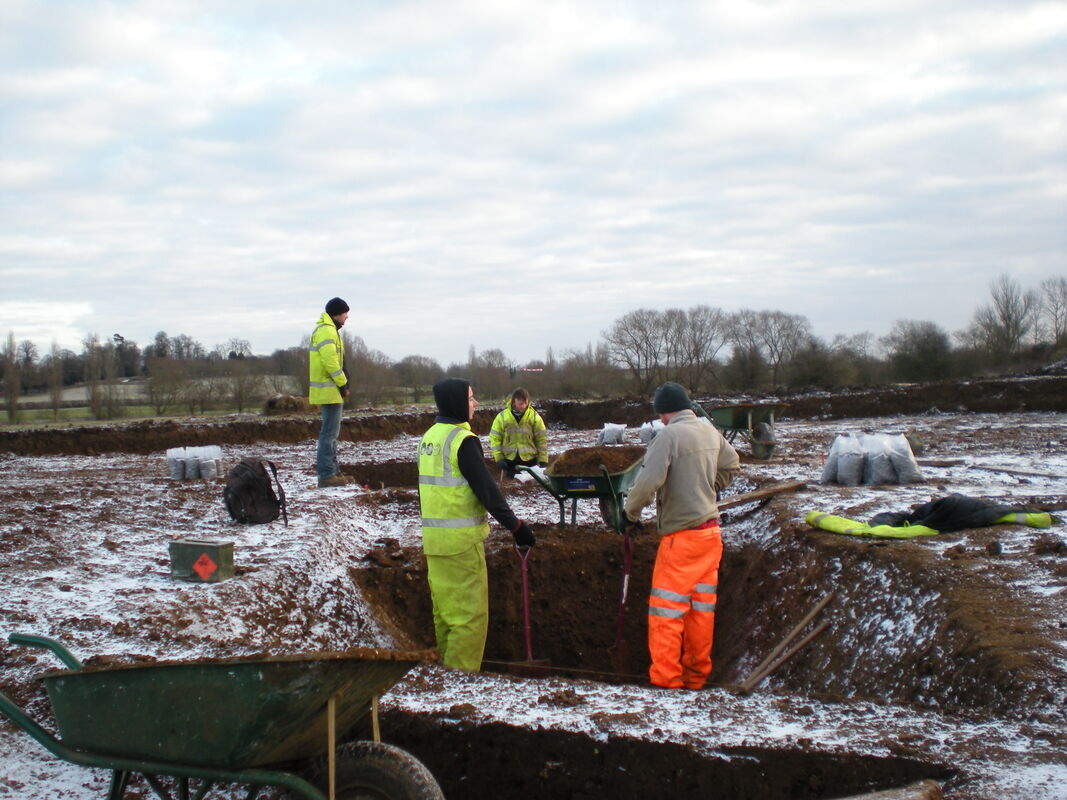
Team work and big ditches, the best way to keep warm is to keep digging! - Photo author's own
  Ultimately we all have to find what works for us and yes we are all going to be cold for a significant portion of the day – especially the poor person stood watching the machine strip the field, (snot icicles are the worst) Just remember not to warm up too fast, increase your exposure to heat gradually, your joints, muscles and blood vessels will thank you for it. And remember if you really are cold and shivering, don’t keep it to yourself – tell someone, the average temperatures in the UK mean it’s unlikely that you’ll get frostbite or be hypothermic, but we all have different circulation and different tolerances for high and low temperatures. Don’t suffer and put yourself at risk, there may be a different task that could be done.
 
If you have any better tips, or there’s something I’ve not covered, please add it in the comments. I’m always hunting for advice on staying warm!

Picture
0 Comments

    S. M. Porter

    Professional archaeologist and author, S. M. Porter loves history, adventure and digging in the mud. Her career is in ruins - just where she wanted it to be.

    Archives

    June 2023
    December 2022
    February 2022
    December 2021
    September 2021
    May 2021
    March 2021
    February 2021
    January 2021
    November 2020
    October 2020
    July 2020
    May 2020
    April 2020
    March 2020
    February 2020
    January 2020
    November 2019
    October 2019
    September 2019
    August 2019
    July 2019
    June 2019
    May 2019
    April 2019
    March 2019
    February 2019

    Categories

    All
    Commercial Archaeology
    Rome

    Subscribe by Email

     Subscribe via FeedBurner

    RSS Feed

    Check out
    ​My Books!
    Picture
    Picture

ⓒ S. M. Porter 2018
​This work remains the property of S. M. Porter and is subject to copyright law.

  • Home
  • Books
  • Blog
  • History Bites
  • About